2026 Top Power Drill System Types for Global Buyers

Time:2026-10-22 Author:Isabella
0%

Global buyers are entering a more demanding power-tool market in 2026. A Power Drill System is no longer just a motor, chuck, and battery. It can include interchangeable heads, smart controls, dust extraction, chargers, and connected service support. Choosing the right type requires more than comparing torque figures.

Tool-industry educator Clint DeBoer has often stressed a practical buying principle: “The best tool is the one that fits the job and the user.” That idea remains useful. A compact cordless system may suit installers working inside cabinets. A high-torque brushless platform may serve construction crews drilling masonry or structural timber. Pneumatic systems still matter in factories, where continuous operation and lighter tool bodies can improve operator comfort.

This guide examines the leading Power Drill System types for international buyers in 2026. It considers voltage platforms, battery compatibility, brushless motors, drilling capacity, ergonomics, safety features, and regional service access. Runtime matters. So does downtime.

Product labels can mislead.

A larger torque number does not always mean better productivity. Heavy tools may also increase wrist fatigue during repetitive work. Smart connectivity sounds attractive, yet some buyers may never use the software. That is an uncomfortable point, but it deserves attention.

The strongest purchasing decision usually matches the system to the working environment. Import requirements, charger standards, spare-battery availability, and warranty response should also influence the final choice. Performance is only one part of reliability. A drill that cannot be serviced locally may become an expensive mistake.
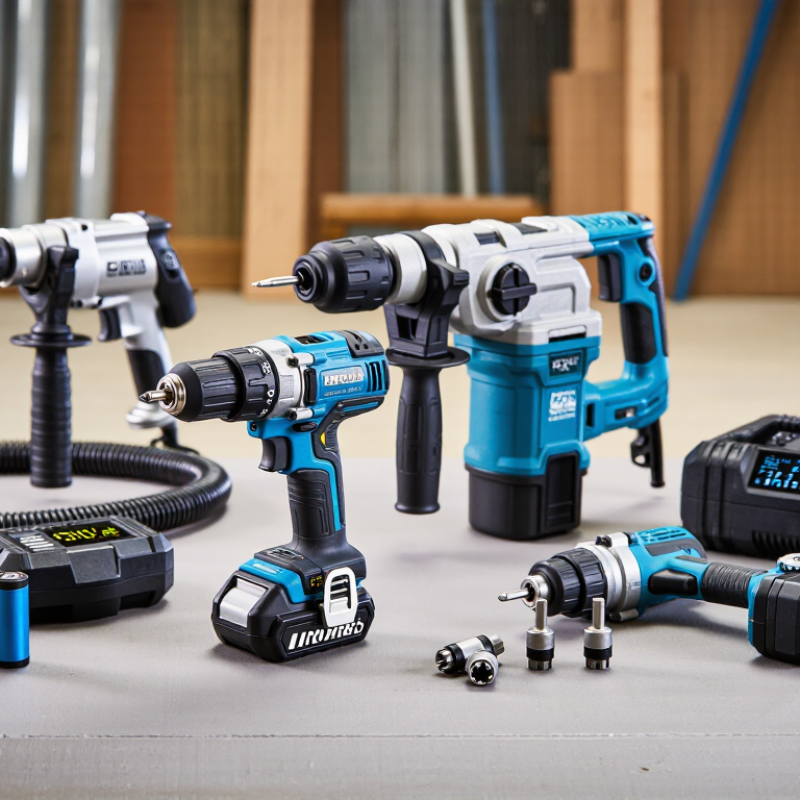
2026 Top Power Drill System Types for Global Buyers

Power Drill System Basics and Core Components

Power Drill System Basics and Core Components

A power drill system combines a motor, gearbox, chuck, control circuit, power source, and structural housing. Each part affects torque, speed, heat, and service life. The motor creates rotation, while the gearbox adjusts that rotation for drilling or fastening. A three-jaw chuck holds round bits, but its grip may weaken when dust enters the mechanism. Small parts matter.

Battery systems usually include lithium-ion cells, a battery management circuit, contacts, and a charger. The control circuit limits current and monitors temperature during demanding work. This protection matters when drilling dense wood or metal, where the motor can stall suddenly. The U.S. Department of Energy reports that motor-driven systems consume about 46% of electricity used in American manufacturing. A drill uses far less energy, yet motor efficiency still influences heat and runtime.

Market data shows why global buyers compare complete systems rather than isolated tools. Grand View Research estimated the global power tools market at approximately USD 36 billion in 2023, with continued growth expected through 2030. However, market estimates vary by research method. Buyers should check whether a report includes professional equipment, household tools, accessories, or batteries. That detail is easy to miss. In practical testing, inspect chuck wobble, trigger response, clutch consistency, and battery temperature after repeated cycles. The quietest drill is not always the best choice. I would also question unusually high runtime claims, because testing conditions can make results look better than daily workshop use.

2026 Top Power Drill System Types for Global Buyers

Power drill systems are primarily differentiated by their energy source, voltage platform, and torque capability. The chart compares common electric drill system categories using typical market specifications.

Values represent typical specification ranges for general-purpose systems. Corded models commonly support regional input voltages from 100–240 V, while 20 V max cordless platforms are generally rated at 18 V nominal. Actual torque varies by motor, gearbox, battery, and operating mode.

Main Power Drill Types for Different Work Environments

Main Power Drill Types for Different Work Environments

Cordless drills suit maintenance teams, installers, and field technicians working where outlets are limited. Their battery platforms improve mobility, especially on rooftops, construction sites, and unfinished interiors. Choose voltage according to workload, not appearance. A compact model handles cabinet screws and light wood drilling, while a higher-capacity system supports repeated masonry work. Dust and cold weather can reduce battery performance. I have seen users underestimate this problem.

Corded drills remain useful in workshops and fixed production areas. They provide steady power for long drilling sessions and avoid battery charging delays. Variable-speed control helps prevent overheating when drilling metal or dense hardwood. For concrete, a hammer drill is usually more suitable because its pulsing action improves bit penetration. It still needs proper pressure and sharp accessories. More force does not always mean faster work.

Rotary hammers are designed for demanding concrete and stone applications, including anchor holes and service penetrations. Their stronger impact mechanism requires trained handling and suitable vibration control. Right-angle drills work well between joists, inside cabinets, and beneath vehicle frames, where standard tools cannot align comfortably. In wet, dusty, or elevated environments, buyers should check ingress protection, insulation, grip design, and service access. Specifications can look impressive, but daily comfort often decides productivity. A careful trial with the intended bit and material may reveal weaknesses that catalog data misses.

Corded, Cordless, and Pneumatic Drill System Comparisons

2026 Top Power Drill System Types for Global Buyers
Corded, Cordless, and Pneumatic Drill System Comparisons

Choosing a power drill system in 2026 requires more than comparing torque figures. Global buyers should examine voltage, frequency, duty cycle, service access, and operator training. A corded drill delivers steady power for long workshop sessions. It suits fixed production areas with reliable electrical supply. However, the cable can restrict movement around large workpieces. I have seen operators lose time repositioning extension leads.

Cordless systems offer fast setup and excellent mobility on construction sites. Battery capacity, charging time, temperature tolerance, and replacement availability matter more than peak torque alone. Buyers should confirm local charging standards and battery transport requirements. A spare battery can prevent interruptions. Still, battery performance drops in cold storage areas. My early comparisons overlooked this detail, and the results looked better on paper than in practice.

Pneumatic drills can perform consistently in demanding industrial environments. They are often lighter and produce fewer electrical concerns near approved work areas. Yet they require a correctly sized compressor, clean air lines, filtration, and regular moisture control. Pressure loss through long hoses can reduce drilling speed. Ask suppliers for measured performance at the tool, not only compressor output. Check noise levels, vibration data, chuck compatibility, and available service parts. A practical trial with the intended material remains valuable. Numbers can mislead.

Key Selection Criteria for Global Buyers in 2026

Global buyers in 2026 need more than a high torque rating when selecting a power drill system. Cordless systems offer mobility, while corded models support long, steady production work. Modular kits can reduce procurement time, but only when batteries, chargers, and accessories remain compatible across the range.

Voltage requirements deserve careful attention. A drill purchased for one market may need a different charger or plug configuration elsewhere. Buyers should verify electrical safety certifications, local import rules, and technical documentation before placing large orders. Battery capacity also matters. A compact battery may suit overhead installation, while a higher-capacity pack supports repeated drilling on a factory line. It adds weight, though.

Real-world testing should cover torque consistency, chuck accuracy, heat buildup, vibration, and trigger control. A promising specification sheet can hide weak performance under continuous load. I have seen evaluation plans focus too heavily on maximum torque. That is a mistake. Service access, spare-part availability, warranty response, and repair instructions often influence total cost more than the purchase price. Short manuals are not always better. Clear diagrams and multilingual safety information help operators avoid preventable errors.

Buyers should request samples and test them with their actual materials, drill sizes, and working temperatures. Dusty sites may require stronger sealing. Wet environments demand suitable protection ratings, not optimistic assumptions. Supplier audits, production records, and consistent batch testing provide stronger evidence than promotional claims. Even experienced teams can overlook charger compatibility. A second review is worthwhile.

Safety, Maintenance, and International Purchasing Considerations

2026 buyers can choose corded, cordless, pneumatic, or brushless power drill systems. A 2024 Fortune Business Insights report valued the global power tools market at about USD 34 billion in 2023. Cordless systems are expanding, but convenience can hide maintenance risks. Battery capacity is not the only purchasing measure.

Safety should begin with the complete system. Select adjustable torque control, mechanical clutch protection, secure chucks, and overload shutdown. IEC 62841 provides widely recognized safety requirements for handheld motor-operated tools. Operators still need eye protection, stable workpieces, and hearing protection. The International Labour Organization reported 2.93 million work-related deaths globally in 2023, showing why routine controls matter. Small failures matter.

Maintenance records should track battery cycles, charger condition, chuck wear, and blocked ventilation slots. A swollen battery must be isolated and professionally assessed. Never mix incompatible chargers or damaged battery packs. For international purchasing, confirm voltage, plug configuration, charger certification, spare-part access, and local service capacity. Lithium battery shipments also require applicable UN 38.3 testing and air-transport documentation. Customs delays can stop an otherwise suitable system. Our own checklists often overemphasize purchase price and undercount downtime. That is a purchasing weakness worth correcting.

FAQS

What are the main parts of a power drill system?

A typical system includes a motor, gearbox, chuck, control circuit, power source, and housing. The motor creates rotation. The gearbox changes speed and torque for drilling or fastening. Small parts matter.

How does a three-jaw chuck affect drilling performance?

It holds round drill bits securely when clean and properly adjusted. Dust can weaken its grip and increase bit wobble. Check chuck accuracy before demanding work. That detail is easy to miss.

Are cordless drills suitable for repeated industrial work?

They provide quick setup and strong mobility on construction sites. Battery capacity, charging time, temperature tolerance, and replacement access deserve careful review. Cold storage can reduce runtime. My earlier comparisons overlooked this.

When is a corded drill the better choice?

A corded model suits fixed work areas with reliable electrical power. It supports long production sessions without battery changes. However, cables can restrict movement around large workpieces. Repositioning takes time.

What should buyers check before choosing a pneumatic drill?

Confirm compressor size, air pressure, filtration, moisture control, and hose length. Pressure loss can reduce drilling speed at the tool. Ask for measured tool performance, not only compressor output. Numbers can mislead.

How should buyers compare drill specifications in real conditions?

Test torque consistency, chuck wobble, trigger response, vibration, heat, and clutch control. Use the actual material and drill sizes from daily work. Maximum torque alone proves little. Test it yourself.

What battery and charger issues require special attention?

Verify charger compatibility, plug configuration, local electrical requirements, and battery transport rules. A compact battery may help overhead work but offers less runtime. Larger packs last longer and weigh more. That trade-off matters.

How can buyers reduce long-term repair and service costs?

Review spare-part availability, service access, warranty response, and repair instructions. Clear diagrams and multilingual safety information help operators avoid preventable errors. Ask for samples and batch-testing records. Promotional claims need checking.

Conclusion

This guide explains the fundamentals of a Power Drill System, including its motor, chuck, gearbox, power source, controls, and supporting accessories. It reviews major drill types suited to workshops, construction sites, manufacturing facilities, maintenance operations, and other work environments. Readers will learn how standard drills, hammer drills, impact-oriented models, and specialized systems differ in performance, control, portability, and application range.

The article also compares corded, cordless, and pneumatic systems by examining power delivery, mobility, runtime, operating conditions, and infrastructure requirements. For global buyers in 2026, important selection factors include drilling materials, workload, ergonomics, durability, replacement parts, voltage compatibility, documentation, and total ownership cost. It further highlights safe operation, routine cleaning, battery and cable care, inspection schedules, storage, training, packaging, shipping, warranty support, and compliance with applicable purchasing and workplace requirements.

Isabella

Isabella

Isabella is a dedicated marketing professional with a sharp focus on driving brand growth and engagement through strategic content creation. With an extensive background in digital marketing, she combines her passion for storytelling with her keen understanding of industry trends to deliver......