Top Knee Joint Implant Manufacturers for Global Buyers

Time:2026-10-13 Author:Sienna
0%

Choosing among the top Knee Joint Implant manufacturers requires more than comparing catalog prices or polished product photographs. Global buyers need evidence, consistency, and a clear understanding of clinical use. Implant performance depends on design geometry, bearing materials, fixation methods, surgical instruments, and patient selection. Small differences matter. A few millimeters can affect alignment, stability, and walking comfort.

Orthopedic surgeon Dr. David W. Lewallen has stated, “The goal of total knee replacement is to relieve pain and restore function.” This practical standard should guide every purchasing decision. Manufacturers should provide credible clinical data, documented quality systems, traceable materials, and dependable technical support. Buyers should also examine sterilization controls, packaging strength, shelf-life information, and training for surgeons and operating-room teams. A strong brand is not automatically the right partner.

This guide reviews leading Knee Joint Implant manufacturers serving international markets. It considers product portfolios, manufacturing expertise, regulatory readiness, distribution capacity, and post-market support. Some companies may offer advanced designs but limited regional service. Others may provide reliable logistics yet weaker published evidence. That difference deserves attention. No supplier is perfect.

Real-world performance can vary with surgical technique, hospital protocols, patient anatomy, and follow-up care. Therefore, purchasing teams should consult qualified orthopedic specialists and review current regulatory requirements before selecting a product. The best choice is rarely the cheapest option. It is the implant supported by sound evidence, transparent communication, and consistent quality from factory to operating room.
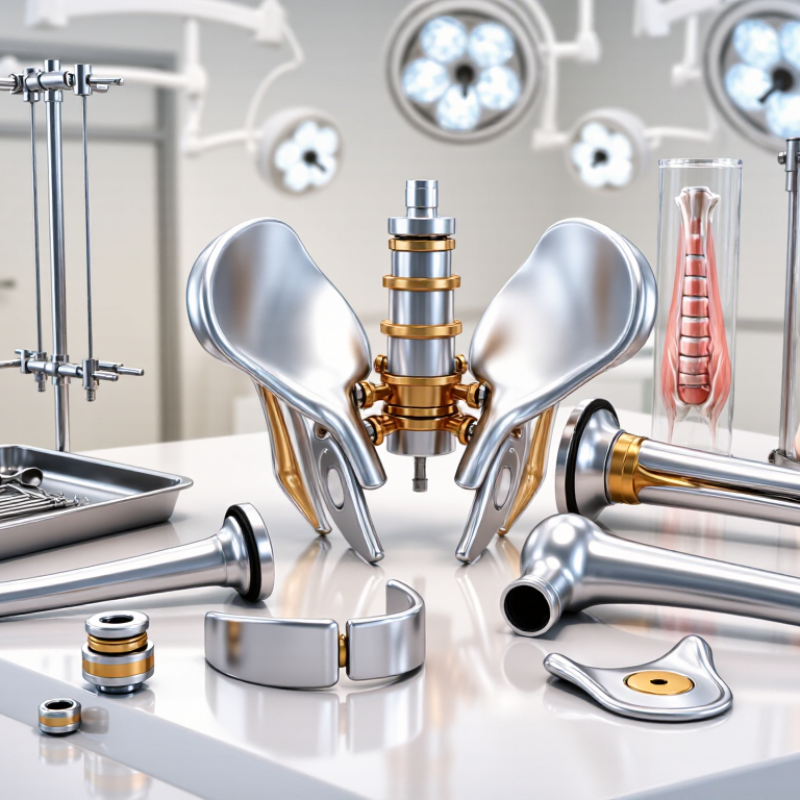
Top Knee Joint Implant Manufacturers for Global Buyers

Knee Joint Implants: Purpose, Types, and Main Components

Knee joint implants are designed to relieve pain and restore movement after severe joint damage. They replace worn cartilage and damaged bone surfaces, often caused by arthritis, injury, or deformity. A typical system includes a femoral component, tibial tray, polyethylene insert, and sometimes a patellar component. Each part must work together during walking, climbing, and turning.

Implants vary by design and surgical approach. Fixed-bearing models offer a stable insert, while mobile-bearing designs allow controlled movement. Some implants preserve the posterior cruciate ligament; others replace its function with a stabilizing post. Cemented, cementless, and hybrid fixation methods also serve different bone conditions. Patient anatomy, bone quality, activity level, and surgeon experience all influence selection. The best choice is not always obvious. Even experienced teams may reconsider a plan after reviewing imaging and intraoperative findings. Global buyers should verify clinical evidence, material specifications, sterilization details, traceability, and applicable regulatory documentation.

Tips: Compare the complete implant system, not one component alone. Check sizing ranges carefully. Confirm compatibility between trays, inserts, and instruments. Ask for clear instructions, quality certificates, and post-market support. Surgical outcomes depend on more than the implant. Training, inventory control, and accurate sizing matter greatly. A lower purchase price may create hidden costs when instruments, revisions, or documentation are inadequate.

How to Evaluate Knee Implant Manufacturers for Global Buyers

Top Knee Joint Implant Manufacturers for Global Buyers

How to Evaluate Knee Implant Manufacturers for Global Buyers

Evaluating knee implant manufacturers requires more than comparing catalog prices. A reliable supplier should provide current quality certificates, regulatory documentation, and traceable production records. Check whether its quality system covers design controls, supplier management, sterilization, and complaint handling.

Ask for clinical evidence that matches the implant’s intended use and patient population. Independent studies are more useful than promotional claims. Review wear testing, fatigue testing, material specifications, and packaging validation. The manufacturer should explain how each production lot is identified and released. Small details matter.

Request samples of inspection reports. Observe whether answers are precise or vague. A serious manufacturer can describe implant geometry, alloy composition, coating methods, and shelf-life controls without hesitation. It should also offer training for surgeons and clear technical support after delivery. Local regulatory experience is valuable, especially when registration requirements differ between markets.

Do not rely on certificates alone. A polished document cannot reveal every manufacturing weakness. Speak with hospitals, distributors, and orthopedic professionals who have used the products. Ask about delivery consistency, revision cases, instrument quality, and response times. Some evaluations remain incomplete because buyers overlook after-sales service. That mistake can become expensive.

Use a written comparison matrix. Include evidence quality, manufacturing capacity, inspection frequency, traceability, training, and communication. Price still matters, but it should not dominate the decision. A lower quotation may reflect fewer services, limited evidence, or hidden logistics risks. Recheck important claims before signing.

Top Knee Joint Implant Manufacturers for Global Buyers - How to Evaluate Knee Implant Manufacturers for Global Buyers

Evaluation framework for comparing knee joint implant manufacturers without relying solely on company size or promotional claims.
Evaluation Dimension Why It Matters Verifiable Indicators Practical Benchmark for Global Buyers Evidence to Request Suggested Weight
Regulatory Authorization Confirms that the specific knee implant system has met the requirements of the target market. Valid market authorization, device classification, authorized indications, and conformity documentation. Authorization must cover the exact product family, configuration, and intended clinical use. Current certificates, declarations, approval numbers, product listings, and regulatory status records. 20%
Quality Management System A controlled quality system reduces the risk of inconsistent manufacturing, documentation errors, and unresolved deviations. ISO 13485 certification, audit history, corrective and preventive action process, supplier controls, and change control. Certification should be current and issued by an appropriately recognized conformity assessment organization. ISO 13485 certificate, latest audit summary, quality manual index, and sample corrective-action records with confidential data removed. 15%
Clinical Evidence and Outcomes Clinical evidence helps buyers assess safety, performance, survivorship, and suitability for the intended patient population. Peer-reviewed studies, registry participation, post-market surveillance, revision data, and documented follow-up periods. Evidence should relate to the same implant design, materials, fixation method, and indication being purchased. Published clinical studies, clinical evaluation reports, surveillance summaries, and product-specific outcome data. 15%
Materials and Biocompatibility Material selection affects corrosion resistance, wear behavior, tissue response, sterilization compatibility, and long-term performance. Material specifications, surface treatment details, chemical characterization, biocompatibility assessment, and traceability. Materials and biological evaluations should be documented against applicable recognized standards, including ISO 10993 where relevant. Material certificates, test reports, biocompatibility assessment, coating specifications, and lot traceability records. 10%
Design and Product Configuration A suitable design must support the surgeon’s preferred technique, patient anatomy, fixation strategy, and inventory requirements. Range of sizes, left and right configurations, primary and revision options, instrumentation compatibility, and surgical workflow. The system should cover the buyer’s routine anatomy and procedure requirements without excessive unused inventory. Technical drawings, size matrix, surgical technique guide, instrument list, and compatibility statement. 10%
Manufacturing Capability Reliable production capacity supports consistent quality, stable lead times, and continuity of supply. Validated processes, inspection equipment, clean manufacturing areas where required, production capacity, and equipment maintenance. Critical processes should be validated, documented, and supported by routine in-process and final inspections. Factory audit report, process validation summary, inspection plan, calibration records, and capacity statement. 8%
Sterilization and Packaging Packaging and sterilization controls protect product integrity and maintain sterility until the stated expiry date. Sterilization method, validated cycle, sterile barrier testing, transport simulation, shelf-life data, and package labeling. Sterility and packaging claims should be supported by validation and remain suitable for the buyer’s distribution conditions. Sterilization validation, packaging validation, shelf-life report, sterilization certificate, and sample labels. 7%
Traceability and Documentation Complete records enable recall management, complaint investigation, inventory control, and regulatory reporting. Unique device identification where applicable, lot or serial tracking, certificates of conformity, and document revision control. Every delivered unit should be linked to production, inspection, sterilization, and distribution records. Sample device labels, traceability procedure, certificate of conformity, technical file index, and recall procedure. 5%
Supply Reliability and Lead Time Hospitals and distributors require predictable replenishment to avoid procedure delays and excess safety stock. Historical on-time delivery, standard production lead time, minimum order quantity, safety-stock policy, and contingency planning. Lead times and service levels should be documented contractually and reviewed using measurable performance data. Delivery performance report, supply agreement, production schedule, inventory policy, and business-continuity plan. 5%
Post-Market Support Effective support improves complaint handling, product training, field safety communication, and ongoing clinical use. Complaint response process, adverse-event reporting, field corrective-action procedure, technical support, and training resources. Defined response times and named local contacts should be available for each target market. Post-market surveillance procedure, complaint form, escalation matrix, training plan, and service-level agreement. 3%
Total Cost of Ownership The purchase price is only one component of the total cost, which may include instruments, training, logistics, inventory, and regulatory maintenance. Unit price, instrument costs, consumables, freight, duties, warranty terms, training fees, and replacement policy. Compare complete procedure costs and lifecycle costs rather than unit prices alone. Itemized quotation, warranty terms, freight assumptions, payment terms, inventory proposal, and five-year cost model. 2%

Leading Knee Joint Implant Manufacturers and Their Product Strengths

Leading knee joint implant manufacturers distinguish themselves through design discipline, material control, and dependable clinical support. Their product portfolios often include fixed-bearing and mobile-bearing systems, cruciate-retaining options, and posterior-stabilized designs. Each configuration serves different ligament conditions and surgical preferences. Fit matters.

Experienced manufacturers use cobalt-chromium alloys, titanium components, and highly cross-linked polyethylene inserts. Their strengths include accurate instrumentation, smooth articulation, and modular sizing. Some systems provide multiple femoral widths, tibial bases, and polyethylene thicknesses. These options help surgeons respond to varied bone anatomy during surgery. However, more choices can increase inventory pressure and training demands.

Global buyers should examine published clinical evidence, manufacturing certifications, sterilization controls, and traceability procedures. Reliable suppliers also offer surgeon education, operating-room support, and revision planning. A strong warranty is useful, but it cannot replace long-term outcome data. Procurement teams should compare wear testing, imaging evidence, delivery stability, and local regulatory acceptance. Data matters.

No manufacturer performs equally well in every market. A company may offer excellent implant geometry but limited regional service. Another may provide responsive training but fewer sizing options. These weaknesses deserve direct discussion. Buyers should request sample instruments, inspect packaging, and review complication reporting policies before approval. Real surgical feedback often reveals practical issues that brochures overlook. The best choice depends on anatomy, surgeon experience, hospital resources, and evidence that remains credible beyond promotional language.

Top Knee Joint Implant Manufacturers for Global Buyers

Leading Knee Joint Implant Manufacturers and Their Product Strengths

Material selection is a major product-strength indicator in knee implants. Cobalt-chromium alloys provide high wear and corrosion resistance, titanium alloys offer lower density and favorable bone compatibility, oxidized zirconium combines a hard bearing surface with reduced metal density, and ultra-high-molecular-weight polyethylene is widely used for lightweight, low-friction inserts. Values shown are approximate reference densities in g/cm³ and are not company-specific performance ratings.

Reference basis: commonly published engineering-material density ranges from ASM International and standard medical-material datasheets.

Regulatory Standards, Clinical Evidence, and Quality Assurance

For global buyers, knee implant selection should begin with documented regulatory compliance, not attractive product claims. Manufacturers should show certification under a medical-device quality system, such as ISO 13485, with current audit status. Risk management should follow ISO 14971, while biological safety testing should address relevant ISO 10993 endpoints. Regulatory clearance differs by market, so buyers must verify the exact device, indication, and submission route. A familiar certificate is not automatically sufficient.

Clinical evidence deserves careful reading beyond headline survivorship numbers. Look for prospective cohorts, transparent inclusion criteria, radiographic follow-up, patient-reported outcomes, and revision data. Evidence should match the implant design, surgical technique, and patient population being considered. Independent registries and peer-reviewed studies can strengthen confidence, although registry data may contain missing follow-up. That limitation matters. A five-year result cannot fully predict performance in younger, highly active patients.

Quality assurance becomes visible in factory records and shipment controls. Reliable suppliers can demonstrate material certificates, validated machining processes, sterilization records, environmental monitoring, and lot-level traceability. Audits should examine nonconformance handling, corrective actions, complaint trends, and change-control procedures. Packaging integrity also deserves testing after transport, temperature shifts, and storage delays. No dossier is perfect. Buyers should document unanswered questions, request evidence updates, and involve qualified surgeons and regulatory specialists before purchasing.

International Purchasing, Customization, Pricing, and Supplier Support

International buyers should evaluate knee joint implant manufacturers beyond catalog breadth. The World Health Organization reports that musculoskeletal conditions affect about 1.71 billion people worldwide. Demand is therefore substantial, but hospital needs differ by region. OECD Health at a Glance 2023 also shows wide variation in knee replacement rates across countries. A supplier must understand local surgical volume, reimbursement rules, and training expectations.

Customization often begins with implant sizing, instrument configuration, packaging language, and sterilization requirements. Ask for traceability records, material certificates, clinical evidence, and ISO 13485 quality-system certification. Pricing should include tooling, samples, regulatory documents, freight, and post-market support. The initial quotation can mislead. A lower unit price may hide expensive validation work or limited inventory.

Supplier support becomes visible during difficult cases. Buyers should confirm response times, surgeon training, inventory planning, and replacement procedures. The American Joint Replacement Registry’s 2024 Annual Report emphasizes the value of long-term outcome tracking and implant performance data. Request registry-compatible data where available.

However, customization is not always better; excessive variation can complicate training and stock control.

A practical evaluation may compare three configurations, two shipment scenarios, and five-year support costs before signing a contract.

Need deeper evidence. Some procurement teams still rely too heavily on brochures, which is a preventable weakness.

FAQS

What product designs are commonly available for knee joint implants?

Common options include fixed-bearing, mobile-bearing, cruciate-retaining, and posterior-stabilized designs. Each suits different ligament conditions and surgical preferences. Fit matters most.

Which materials are often used in knee joint implants?

Common materials include cobalt-chromium alloys, titanium, and highly cross-linked polyethylene. They support strength, controlled movement, and wear resistance. Material certificates should be reviewed.

How can sizing options improve surgical flexibility?

Multiple femoral widths, tibial bases, and insert thicknesses can match varied bone anatomy. This flexibility may help during surgery. More options create inventory pressure.

What evidence should buyers request from suppliers?

Buyers should request clinical studies, wear-testing results, imaging evidence, and long-term outcome data. Manufacturing certifications and sterilization records also matter. A warranty is not enough.

How should international buyers compare total pricing?

Compare unit prices with tooling, samples, documentation, freight, validation, and support costs. A low quotation may hide expensive follow-up work. Look beyond the invoice.

What customization options are useful for hospitals?

Useful customization may include implant sizes, instrument layouts, packaging language, and sterilization requirements. Traceability records and material certificates should match each configuration. Too much variation can complicate training.

How important is supplier support after purchase?

Support matters during difficult cases, urgent replacements, and staff training. Confirm response times, inventory planning, surgeon education, and revision assistance. Brochures cannot answer every problem.

What practical checks should a hospital complete before approval?

Request sample instruments, inspect packaging, and review complication-reporting procedures. Compare shipment scenarios and five-year support costs. Real surgical feedback can expose small but serious weaknesses.

Conclusion

This guide explains the purpose, types, and main components of a Knee Joint Implant, helping global buyers understand how implant design supports stability, mobility, and long-term performance. It also outlines key factors for evaluating manufacturers, including engineering capabilities, material selection, production consistency, technical expertise, and after-sales support. Buyers can use these criteria to compare suppliers according to product strengths, application requirements, and hospital or clinical needs.

The article also highlights the importance of regulatory compliance, clinical evidence, traceability, quality assurance systems, and reliable inspection procedures. For international purchasing, it discusses communication, documentation, shipping coordination, customization options, pricing structure, minimum order considerations, and ongoing supplier service. By taking a comprehensive approach, purchasers can identify dependable manufacturing partners and make informed decisions that balance product safety, performance, cost, and long-term cooperation.

Sienna

Sienna

Sienna is a skilled marketing professional with a deep expertise in our company’s core products and services. With a passion for innovation and detail, she plays a pivotal role in crafting insightful blog posts that not only highlight the unique features of our offerings but also provide valuable......