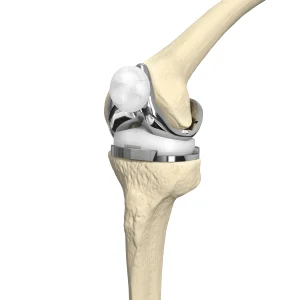
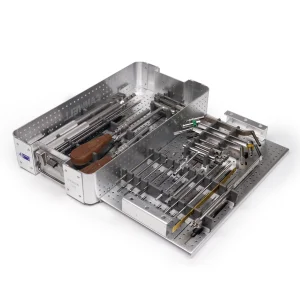
Class III high-fatigue prosthetic components manufactured under rigorous ISO 13485 standards, engineered for Japanese clinical parameters.
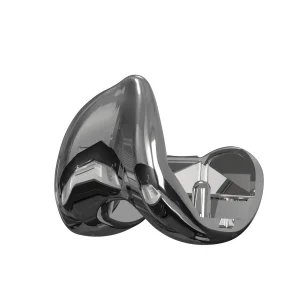
Japan is currently navigating an unprecedented demographic shift, standing as the world's most rapidly aging nation. According to the Ministry of Health, Labour and Welfare (MHLW), over 29% of the Japanese population is aged 65 or older. This demographic curve correlates directly with the soaring prevalence of musculoskeletal degenerative disorders, most notably osteoarthritis (OA) of the hip and knee, and osteoporotic fractures. The demand for surgical interventions, particularly Total Hip Arthroplasty (THA) and Total Knee Arthroplasty (TKA), has shifted from a clinical alternative to a socio-economic necessity to maintain the independence and mobility of the Japanese silver generation.
Japanese clinical environments place extremely high priority on long-term survivorship of implants, low wear rates, and anatomical matching suited to East Asian bone morphologies, which often feature smaller femoral shafts, wider acetabular cavities, and specific tibial slope angles. As a premier joint exporter, we optimize our metallurgical formulations and geometrical tolerances to align seamlessly with these specific clinical expectations.
Operating under world-class parameters to guarantee absolute quality control, manufacturing continuity, and global traceabilities.
| Operational Metric | Verified Parameters & Standard Specifications |
|---|---|
| Company Registration Date | 2004-11-03 (Over two decades of dedicated medical device fabrication) |
| Accepted Trading Languages | English, Japanese Technical Dossier Translation Compatibility |
| Quality Control Framework | Yes, comprehensive traceability of all raw materials from medical-grade suppliers (such as Zapp titanium, Solvay PEEK, and Orthoplastics UHMWPE) |
| Product Testing & Inspection | Inspection of all products, random inspection, & custom Japanese inspection schemes (100% optical and dimensional verification) |
| Primary Certifications | ISO13485 (SX 2180356-1), 93/42/EEC CE (HD 2180356-1), MDR (6142788CE02) |
| Customization Capabilities | Light customization, sample processing, graphic matching, & custom-on-demand sizes for Asian-specific skeletal frames |
Pioneering tribological designs and surface modification technology to enhance osseointegration and extend implant lifespans.
High-purity vacuum plasma spray Hydroxyapatite (HA) coating facilitates mechanical interlocking, ensuring rapid biological fixation with host bone tissues.
Utilizing GUR 1020 medical-grade UHMWPE, treated with advanced cross-linking radiation to achieve exceptional wear resistance and high joint longevity.
Cobalt-Chromium-Molybdenum alloys crafted through state-of-the-art five-axis milling machines, resulting in mirror-like surface finishes (Ra < 0.05um) for articulating surfaces.
By leveraging advanced automated machining centers, automated coordinate measurement machines (CMM), and ISO Class 7 cleanrooms, our factory delivers top-tier implants that rival Western counterparts at a far more competitive cost structure. For Japanese distributors and medical wholesalers, this equates to higher margins without compromising clinical safety.
We implement a strict 100% material trace system. Each titanium bar and polyethylene block is logged with its original mill test certificate, batch heat-treatment files, and final post-sterilization documentation. This raw-material integrity makes PMDA auditing pathways predictable and reduces regulatory friction for Japanese importers.
Navigating the complex regulatory waters of Japan's Pharmaceuticals and Medical Devices Agency (PMDA) together.
We provide comprehensive biological safety testing data (ISO 10993), chemical characterization reports, and mechanical wear test profiles required for Class III Shonin applications.
Alignment with Ministry of Health, Labour and Welfare Ordinance No. 169 (Japanese QMS standards), bridging the gap between ISO 13485 and Japan-specific requirements.
Working closely with your Designated Marketing Authorization Holder (DMAH) or foreign manufacturer accreditation agent in Japan to ensure smooth import customs clearance.
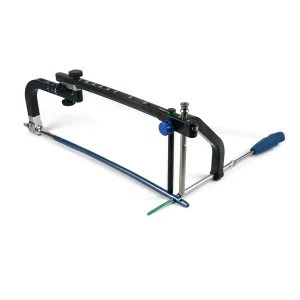
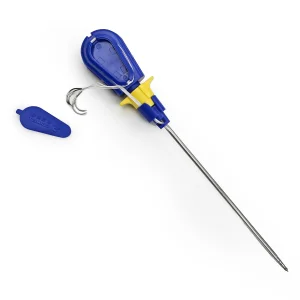
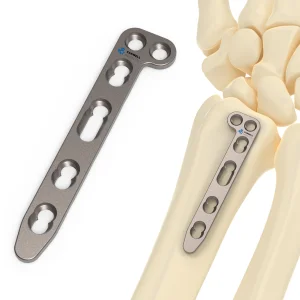
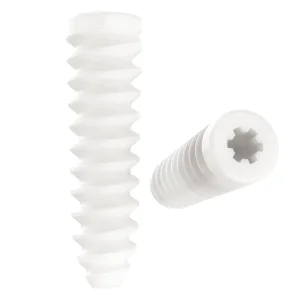
Beyond reconstructive joints: exploring our clinically proven trauma fixation lines, surgical equipment, and sports medicine implants.
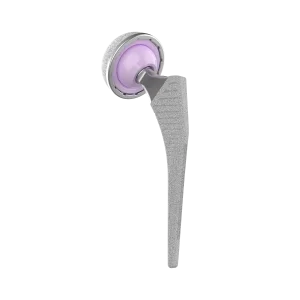
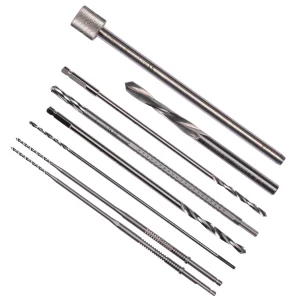
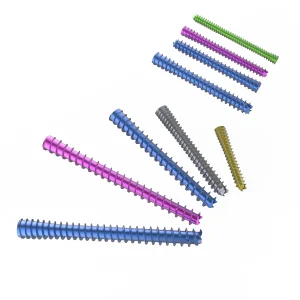
Uncompromising standards in medical metallurgy ensuring the longevity required by modern knee and hip replacements.
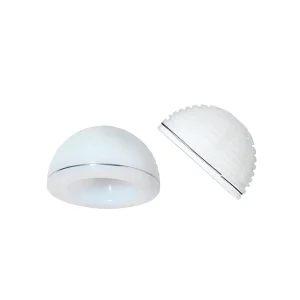
The core wear interface in total hip and knee arthroplasty dictates long-term clinical outcomes. At our factory, we design these interfaces utilizing state-of-the-art materials technology. The UHMWPE liners undergo highly controlled electron beam irradiation to induce cross-linking. This optimizes the crystal structure, reducing the volumetric wear rates by up to 85% compared to traditional polyethylene.
For the femoral articulating components, our CoCrMo (Cobalt-Chromium-Molybdenum) alloys are polished using automated fluid-abrasive machines, achieving surface roughness values (Ra) below 0.05 microns. This extremely smooth surface minimizes abrasion against the polyethylene liners, preventing sub-micron poly debris from triggering osteolysis—the primary cause of aseptic implant loosening.
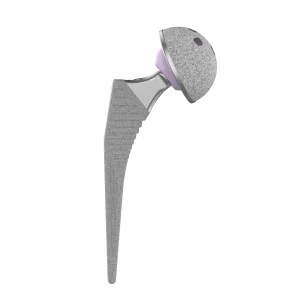
Additionally, our cementless femoral stems feature a specialized titanium plasma spray combined with a Hydroxyapatite (HA) micro-crystalline coating. This bio-active layer is engineered with specific porosity (typically 30% to 50%) and pore sizes of 100-400 microns. This morphology mimics natural trabecular bone, prompting early osteoblast migration and securing strong biological fixation within weeks of the operation.
| Component Group | Material Standard | Surface Treatment / Specifications | Key Clinical Benefit | |
|---|---|---|---|---|
| Femoral Stem | Ti-6Al-4V ELI (ASTM F136) | Vacuum Plasma Spray + HA Coated | High fatigue strength, biomechanical matching, rapid osseointegration | Class III |
| Femoral Head / Knee Component | CoCrMo Alloy (ASTM F1537) | Super-finished mirror polishing (Ra < 0.05 μm) | Minimal friction coefficient, low wear particle generation | Class III |
| Acetabular Liner / Tibial Insert | Cross-linked UHMWPE (ASTM F648) | High-dose gamma radiation cross-linking + EtO sterilization | Excellent oxidation resistance, superior wear survivorship | Class III |
Clear answers regarding localization, supply logistics, custom manufacturing, and PMDA registration for the Japanese medical market.
Upgrade your local distribution inventory with clinically proven, highly durable, and cost-efficient orthopedic solutions. Discuss technical specifications and regulatory pathways with our B2B export team today.
 Harney-Well